- Who is Susan B. Anthony? An Overview
- Real Name and Family Heritage
- Early Life and The Call to Activism
- The Suffrage Journey and The Supreme Court
- Professional Achievements and The National Woman Suffrage Association
- Susan B. Anthony Net Worth and Financial Legacy
- Physical Appearance: Age and Characteristics
- Personal Life and Dedicated Celibacy
- Conclusion
Who is Susan B. Anthony? An Overview
Susan B. Anthony was an American social reformer and women’s rights activist who played a pivotal role in the women’s suffrage movement. Born on February 15, 1820, her legacy remains a cornerstone of American democracy. In 2026, her life is celebrated globally on “Susan B. Anthony Day,” honoring her commitment to equality and her instrumental work that eventually led to the 19th Amendment. She is widely regarded as one of the most important figures in the history of civil rights, known for her partnership with Elizabeth Cady Stanton and her uncompromising pursuit of justice.
Real Name and Family Heritage
The suffragist’s real name was Susan Brownell Anthony. She was born in Adams, Massachusetts, into a Quaker family with a deep commitment to social equality. Her father, Daniel Anthony, was a cotton manufacturer and a firm believer in the abolition of slavery, while her mother, Lucy Read, supported her daughters’ education at a time when women’s schooling was often neglected. This upbringing in a politically active, reform-minded household served as the foundation for Susan’s lifelong career in activism.
Early Life and The Call to Activism
Susan B. Anthony began her career as a teacher, but she quickly became frustrated by the pay inequality between male and female educators. Her early life was defined by her work in the temperance and abolitionist movements. In 1851, she was introduced to Elizabeth Cady Stanton, a meeting that launched a lifelong partnership. Together, they founded the New York Women’s State Temperance Society after Anthony was prevented from speaking at a temperance conference because she was a woman—a moment that famously ignited her focus on women’s rights.
The Suffrage Journey and The Supreme Court
Susan B. Anthony’s “Wikipedia” career is defined by her relentless travel and public speaking across the United States. In 1872, she performed a historic act of civil disobedience by voting in the presidential election in Rochester, New York. She was arrested, tried, and fined $100, which she famously refused to pay. Although she did not live to see the passage of the 19th Amendment in 1920, her legal challenges and lobbying efforts laid the groundwork for the Supreme Court to eventually recognize women’s right to vote. This “suffrage journey” remains her most significant contribution to the American political landscape.
Professional Achievements and The National Woman Suffrage Association
In 1869, Anthony and Stanton founded the National Woman Suffrage Association (NWSA), which focused on a federal constitutional amendment for women’s voting rights. She also co-published The Revolution, a weekly journal that advocated for women’s and African Americans’ rights. Her professional life was one of constant movement; she gave between 75 and 100 speeches per year for 45 years, making her one of the most visible and effective organizers in U.S. history.
Susan B. Anthony Net Worth and Financial Legacy
While the concept of “net worth” was different in the 19th century, Susan B. Anthony famously lived a life of relative poverty, funneling nearly all her earnings from speaking engagements into the suffrage movement. At the time of her death in 1906, her estate was worth very little in liquid assets, but her “historical net worth” is immeasurable. In 2026, her image on the dollar coin and her presence in every American history curriculum represent a wealth of cultural influence that far exceeds any monetary value.
Physical Appearance: Age and Characteristics
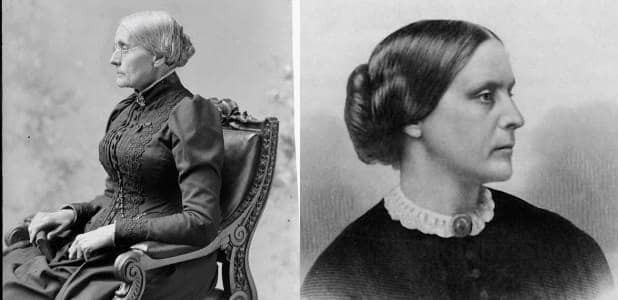
Susan B. Anthony was born on February 15, 1820, and died on March 13, 1906, at the age of 86. She stood at approximately 5 feet 5 inches and was known for her stern but dignified appearance. In historical portraits, she is often seen wearing a simple black dress and a red shawl, which became a symbol of her steadfast nature. Her physical presence was characterized by a piercing gaze and a voice that was said to be clear and commanding, even in large, unamplified halls.
Personal Life and Dedicated Celibacy
Unlike many of her contemporaries, Susan B. Anthony never married. She viewed marriage at the time as a legal “civil death” for women, which would have stripped her of her property and her right to act independently. She famously stated, “I never felt I could give up my life of liberty to become a man’s housekeeper.” Her personal life was instead filled with deep friendships with other reformers and a total devotion to her “children”—the laws and movements she helped birth.
Conclusion
The biography of Susan B. Anthony is the story of a woman who refused to accept the status quo. In 2026, as we reflect on her journey from a Massachusetts schoolhouse to the halls of Congress, her impact is undeniable. She remains the quintessential symbol of American persistence. As we celebrate her birthday today, her “Wikipedia” entry serves as a reminder that the rights we enjoy today were built on the sacrifices of those who dared to imagine a more perfect union. Her life’s work continues to inspire new generations of leaders to keep pushing for absolute equality.