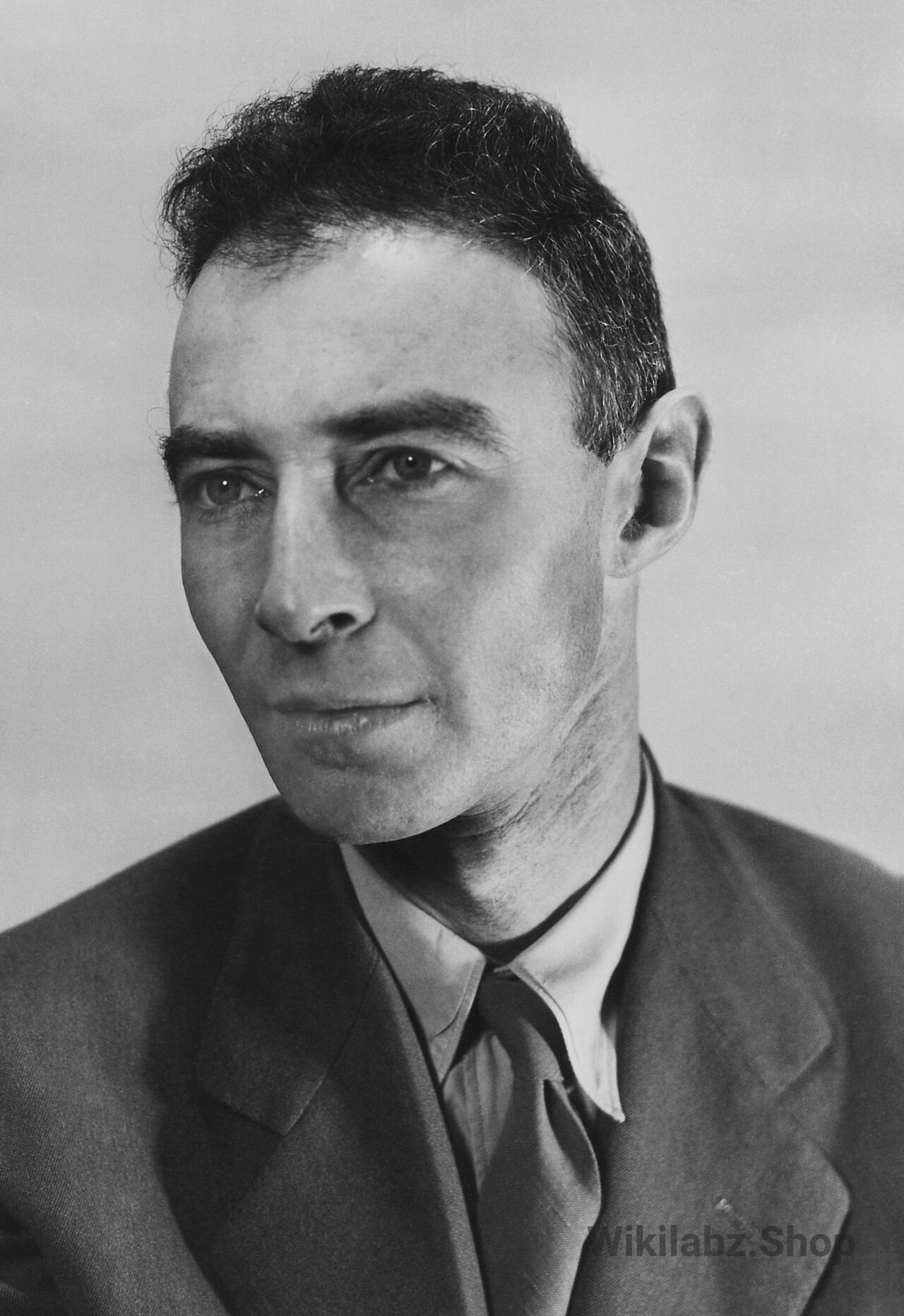
Introduction: The Father of the Atomic Bomb
Julius Robert Oppenheimer (April 22, 1904 – February 18, 1967) was an American theoretical physicist and the wartime director of the Los Alamos Laboratory. He is best known for his pivotal role in the Manhattan Project, the research and development undertaking that produced the first nuclear weapons. In 2026, his biography has seen a massive resurgence in search volume as the world marks the anniversary of his death and reflects on the ethical parallels between the “Atomic Age” and the current “AI Revolution.”
Early Life and Real Name
His real name was Julius Robert Oppenheimer, though he famously insisted that the “J” stood for nothing. Born in New York City to a wealthy Jewish family of German immigrants, Robert was a polymath from a young age. He excelled in Greek, Latin, physics, and chemistry, and even had his geological research published at age 12. His Wikipedia-worthy intellect eventually led him to Harvard and later to the University of Göttingen, where he studied under the masters of quantum mechanics.
Career: From Quantum Physics to Los Alamos
Oppenheimer’s career was divided into two distinct phases: his academic pursuit of black holes and quantum field theory, and his leadership of the Manhattan Project. In 1942, he was handpicked by General Leslie Groves to lead the secret laboratory in New Mexico. Under his direction, the “Trinity” test successfully detonated the first atomic bomb in July 1945. After the war, he became the chairman of the General Advisory Committee of the Atomic Energy Commission (AEC), where he famously lobbied for international control of nuclear power to prevent proliferation.
2026 Milestone: The Digital Archive Release
As of February 18, 2026, Oppenheimer is trending globally due to the “Los Alamos Digital Reveal.” For the first time, over 5,000 pages of his personal correspondence from 1954 the year his security clearance was controversially revoked have been made public. These documents offer a new perspective on his “Red Scare” trial and his internal struggle with the destruction caused by his creation. This 2026 update has sparked a fresh wave of documentaries and podcasts dedicated to his life.
J. Robert Oppenheimer’s Historical Legacy
While he did not have a “net worth” in the modern influencer sense, Oppenheimer’s wealth was rooted in his family’s textile import fortune and his prestigious academic salaries. Today, his “value” is measured in his scientific contribution. He is a 2026 symbol for “The Responsible Scientist,” a figure used in academic circles to discuss the weight of innovation. His quote from the Bhagavad Gita “Now I am become Death, the destroyer of worlds” remains the most quoted phrase in the history of science on Wikipedia.
Quick Facts & Bio Summary
- Full Real Name: Julius Robert Oppenheimer
- Born: April 22, 1904 (New York City)
- Died: February 18, 1967 (Princeton, New Jersey)
- Nationality: American
- Education: Harvard University, University of Cambridge, University of Göttingen
- Key Achievement: Scientific Director of the Manhattan Project
- Famous Quote: “Now I am become Death, the destroyer of worlds.”
Conclusion
The biography of J. Robert Oppenheimer serves as a timeless warning and an inspiration. In 2026, as we stand on the precipice of new technological frontiers, the life of the man who unlocked the atom is more relevant than ever. From his brilliant youth in New York to his somber final years in Princeton, his journey is a Wikipedia of triumph, tragedy, and the eternal search for ethical truth. Robert Oppenheimer didn’t just change the map of the world; he changed the destiny of humanity.